AI-Powered EHSQ for Ports and Maritime: From Data to Safer Decisions
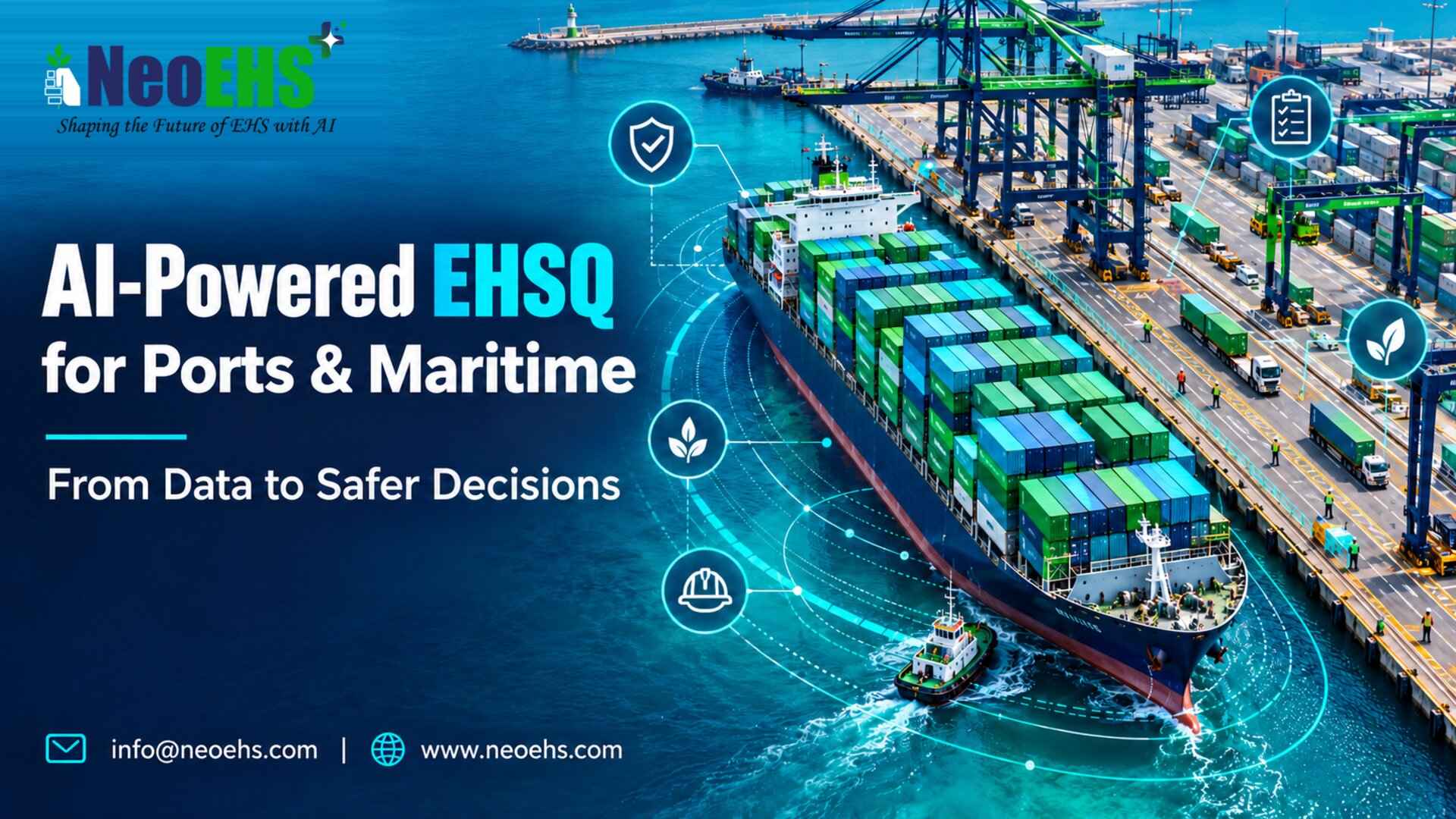
A crane inspection records a recurring defect. A contractor raises a concern during a toolbox meeting. A supervisor reports a near miss at the same berth. Each record matters. But who sees the connection before the next shift starts?
Ports generate information throughout the day. The difficult part is getting the right information to the right person while there is still time to act.
That is the practical purpose of AI-powered EHSQ: connecting environmental, health, safety and quality information so people can make better-informed operational decisions.
What is AI-powered EHSQ software for ports and maritime?
AI-powered EHSQ software is a digital system that combines environmental, health, safety and quality workflows with AI-assisted analysis. In ports and maritime operations, it can help teams organise records, identify recurring patterns, prioritise concerns and track responses across terminals, berths and contractor activities.
EHSQ covers four connected disciplines:
- Environment: spills, waste, emissions and environmental observations.
- Health: occupational exposure, worker wellbeing and health-related work controls.
- Safety: hazards, permits, inspections, incidents and emergency readiness.
- Quality: process consistency, nonconformities, corrective actions and service requirements.
AI adds value when its output helps someone make a specific decision. A risk score without supporting evidence, a responsible owner or a response process is simply another number on a screen.
Why disconnected information creates problems at ports
Consider an illustrative container-terminal scenario. An inspection identifies damaged segregation barriers. A near-miss report describes a pedestrian entering a vehicle route. A shift note mentions temporary traffic changes. If these records remain separate, each team may see only part of the issue.
Bringing them together allows a supervisor to examine whether the temporary arrangements are working, inspect the location and assign a response. AI-assisted analysis may help surface similar descriptions even when workers use different words.
The decision still belongs to the people responsible for the operation. Software should make the evidence easier to find and the follow-through easier to verify.
How does port data become a safer decision?
A useful workflow has five stages:
- Capture: record the observation with its location, time, activity and supporting evidence.
- Connect: associate it with the relevant asset, contractor, permit or previous finding.
- Review: use rules and AI-assisted analysis to highlight records requiring attention.
- Act: assign a competent owner, a response and a deadline appropriate to the risk.
- Verify: check whether the action addressed the concern and share the learning.
For example, an expired permit is usually identified by a straightforward rule. Grouping differently worded reports about the same recurring hazard is a more suitable AI task. Both are useful; they should not be confused.
Practical applications across port and maritime operations
1. Make high-risk work easier to coordinate
Maintenance, lifting, hot work and cargo operations can overlap. Supervisors need visibility of where work is taking place, who is authorised and which controls remain outstanding.
NeoEHS Permit to Work software supports digital permit creation, approval, isolation verification and closure. Connecting these records with work locations and contractor information supports a more informed review before authorisation.
A digital approval is not proof that a physical control is effective. Field verification remains essential.
2. Learn from near misses and repeated observations
One report may describe a “blind corner”; another may mention “poor visibility near the warehouse.” Reviewing them together can reveal a recurring location-specific concern.
NeoEHS Incident Management software provides a route for incident reporting and investigation. AI-assisted review can support the search for recurring themes, while investigators assess the evidence and determine causes.
Reports should lead to feedback. Workers are more likely to understand the value of reporting when they can see what happened next.
3. Give inspections operational context
A repeated finding deserves more attention than its appearance as another completed checklist item. Useful context includes the affected equipment, previous repairs, open actions and whether the same concern appears elsewhere.
For a bulk terminal, this might mean reviewing repeated conveyor-guard findings together. For a container terminal, it could mean examining recurring defects associated with a particular area or equipment type. These are illustrative workflows, not claims about a specific customer outcome.
4. Connect environmental and occupational-health information
Dust complaints, housekeeping observations and monitoring results can tell a more useful story when reviewed together. The same principle applies to noise, heat exposure and spill-related records.
Teams should record the circumstances behind a reading, including the activity and monitoring method. An isolated measurement or an AI summary should not be treated as a complete exposure assessment.
Sensitive worker-health information also needs access controls. Operational dashboards should show the information needed for decisions without unnecessarily exposing personal records.
5. Bring quality into the same improvement cycle
The “Q” matters. A damaged cargo report, repeated documentation error or missed inspection step may expose a process weakness that also affects safety or environmental performance.
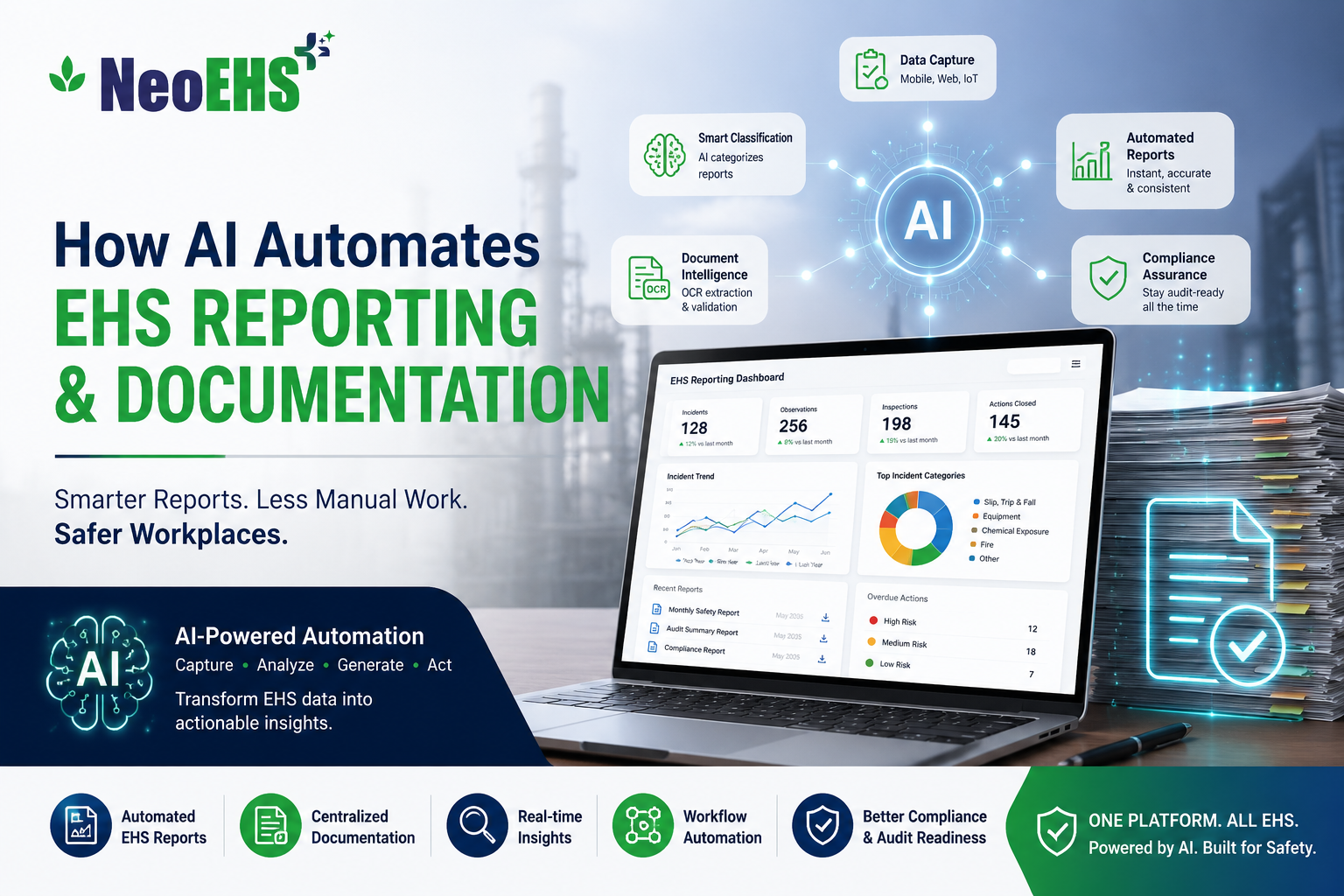
A connected quality workflow should record the nonconformity, investigate contributing factors, assign corrective action and verify effectiveness. NeoEHS Audit Management software is relevant to organising audit findings and follow-up. The exact quality workflows required by a port should be mapped during solution scoping.
Closing an action because a document was uploaded is different from confirming that the underlying problem has been addressed.
What should port leaders see on an EHSQ dashboard?
A management dashboard should help answer operational questions, rather than simply count completed forms.
| Indicator | Decision it supports |
|---|---|
| Overdue high-priority actions | Where does management intervention need to happen? |
| Repeat findings by location or asset | Which controls may need a deeper review? |
| Permit exceptions and missing verifications | Which work authorisations require attention? |
| Corrective actions awaiting effectiveness checks | Which apparent improvements remain unverified? |
| Environmental events by activity | Where should teams investigate recurring conditions? |
| Reporting and feedback turnaround | Are workers receiving a timely response? |
Compare trends with suitable context, such as working hours, activity volumes and reporting coverage. More near-miss reports may reflect better participation rather than deteriorating safety.
Where NeoEHS fits
NeoEHS for Ports and Maritime brings together inspections, permits, incidents, audits, contractor safety and environmental management. Its maritime offering includes centralised operational visibility and AI-powered risk intelligence.
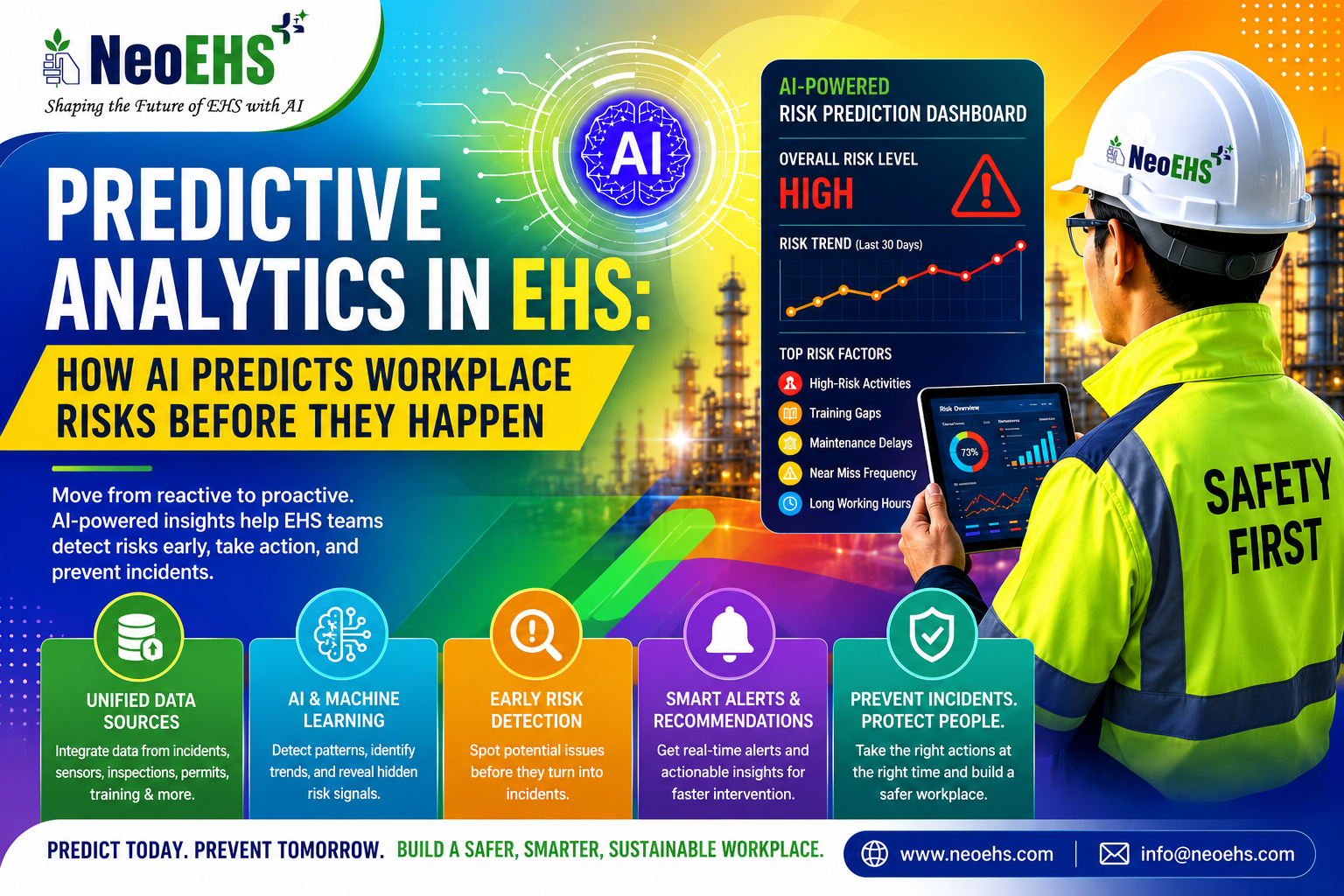
The NeoEHS predictive analytics offering focuses on using EHS information to identify emerging patterns and support preventive decisions. Its usefulness at a particular port depends on available data, configuration, integrations and the way teams respond to findings.
The best starting point is a real operational problem: repeated findings, slow action follow-up or fragmented permit records. Define the decision that needs to improve, then connect the information needed to support it.
Start with a focused implementation
Choose one terminal or workflow. Standardise asset and location names, agree responsibility for records and establish a baseline. Pilot the process with field users before expanding.
Assess AI suggestions against actual records. Track missed issues as well as false alerts, and make it easy for users to challenge an output. Agree how work will continue if connectivity or a system is unavailable.
Success should be judged by the quality of follow-through: clearer responsibility, better evidence and verified improvements. Faster processing is useful, but speed alone is not a safety outcome.
Frequently asked questions
What is the difference between EHS and EHSQ?
EHS covers environment, health and safety. EHSQ adds quality management, including process consistency, nonconformities and corrective action. Connecting these disciplines can help teams investigate shared operational weaknesses.
Can AI predict every port incident?
No. AI can highlight patterns and potential concerns in available data, but incomplete records, changing conditions and unusual events limit prediction. Competent judgement and effective physical controls remain necessary.
Does a port need cameras and IoT sensors to begin?
No. A port can begin by improving inspections, permits, incident reporting and action tracking. Camera and sensor integrations can be considered where they address a defined need and their performance can be validated.
Can EHSQ software guarantee compliance?
No. Software can help organise obligations, records and follow-up. Compliance depends on applicable requirements, correct implementation and actual operating practices.
How should a port evaluate NeoEHS?
Ask for a demonstration using representative workflows and sample records. Review the required modules, approval rules, access controls, reporting, integrations and implementation support against the port’s needs.
Turn information into action with NeoEHS
The value of connected EHSQ is visible when a supervisor can find the evidence, understand the concern, assign action and confirm the result.
Explore how NeoEHS can support your port’s next step towards more informed safety, environmental and quality decisions.
Explore the NeoEHS Ports & Maritime solution
Email: info@neoehs.com · Website: www.neoehs.com