AI for ESG Risk Assessment | Predictive Sustainability Risk Management | NeoEHS
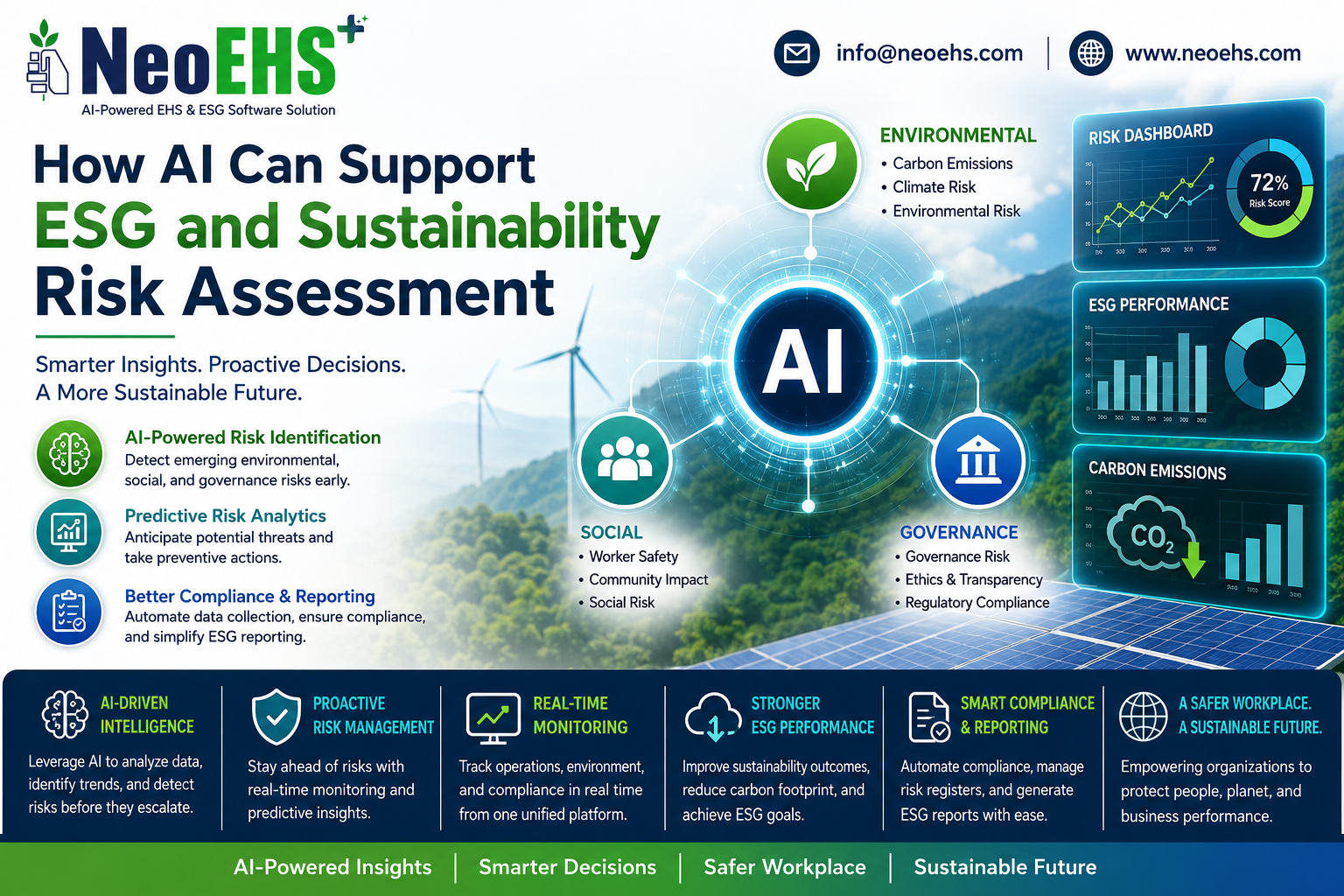
How AI Can Help Organizations Make Better ESG and Sustainability Risk Decisions
For many years, risk assessments have been an essential part of Environmental, Health & Safety (EHS) programs. They help organizations identify hazards, reduce incidents, and maintain compliance. But today's business environment is changing rapidly.
Climate change, evolving regulations, supply chain disruptions, rising stakeholder expectations, and sustainability commitments have made risk management far more complex than it was just a few years ago.
The question many organizations are now asking is not "Should we perform risk assessments?" but rather "How can we make them smarter and more proactive?"
This is where Artificial Intelligence (AI) is beginning to make a real difference.
Moving Beyond Traditional Risk Assessments
Most organizations still conduct risk assessments using spreadsheets, paper forms, or periodic inspections. These methods have served businesses well for decades, but they also have limitations.
A risk assessment completed six months ago may no longer reflect today's reality. Equipment conditions change, work practices evolve, weather patterns shift, and new regulations are introduced. By the time an issue is identified, the opportunity to prevent it may already have passed.
AI doesn't replace experienced safety professionals—it helps them make better decisions by bringing together information that would otherwise be difficult to analyze manually.
Seeing Risks Before They Become Problems
One of AI's greatest strengths is its ability to recognize patterns.
Imagine an organization with years of incident reports, audit findings, inspection records, maintenance history, and environmental monitoring data. Individually, each record tells only part of the story. Together, they contain valuable insights.
AI can analyze these large volumes of information and highlight trends that people might easily overlook.
For example, it may identify that a particular site experiences an increase in near misses during specific weather conditions, or that recurring equipment failures are linked to delayed maintenance. These insights allow organizations to act earlier rather than simply reacting after an incident occurs.
Supporting Sustainability Goals
Sustainability is no longer just an annual report prepared for investors. It has become part of everyday business decisions.
Organizations today need visibility into energy consumption, waste generation, emissions, water usage, and environmental performance across multiple facilities.
AI can help by continuously analyzing operational data and highlighting unusual trends or areas that require attention. Instead of waiting for monthly reports, sustainability teams can receive timely insights that support faster decision-making and continuous improvement.
Helping Safety Teams Focus on What Matters
Safety professionals often spend significant time collecting information, reviewing documents, preparing reports, and following up on compliance activities.
AI can automate many of these routine tasks, allowing EHS teams to focus more on improving workplace safety and engaging with employees.
Whether it's identifying overdue inspections, highlighting recurring hazards, or supporting incident investigations, AI acts as an intelligent assistant rather than replacing human expertise.
Improving ESG Decision-Making
Environmental, Social, and Governance (ESG) risks are interconnected.
A supplier's environmental performance may affect business continuity. Poor safety performance can influence employee wellbeing and organizational reputation. Compliance failures can impact investor confidence.
AI helps organizations connect these different pieces of information, giving leaders a clearer understanding of their overall risk landscape.
Rather than relying solely on historical data, organizations can make decisions based on current conditions and emerging trends.
Technology Should Support People
One of the biggest misconceptions about AI is that it replaces human judgment.
In reality, the best AI solutions are designed to support experienced professionals—not replace them.
Risk assessments will always require knowledge, experience, site inspections, and professional judgment. AI simply provides additional insights, helping organizations prioritize actions, identify emerging risks, and make more informed decisions.
The final decisions remain in the hands of people.
Looking Ahead
As ESG expectations continue to grow, organizations will need faster, smarter, and more connected ways to manage risk.
Artificial Intelligence is becoming an important part of that journey—not because it has all the answers, but because it enables organizations to ask better questions, identify opportunities earlier, and respond more effectively.
Companies that embrace AI thoughtfully today will be better positioned to build safer workplaces, strengthen compliance, improve sustainability performance, and create long-term business resilience.
How NeoEHS Can Help
At NeoEHS, we believe technology should empower people—not replace them.
Our AI-powered EHS and ESG platform is designed to help organizations identify risks earlier, streamline compliance, improve incident management, monitor environmental performance, and support smarter decision-making across the enterprise.
Whether you're managing a manufacturing facility, construction project, mining operation, power plant, or port, NeoEHS provides the tools needed to move from reactive safety management to proactive risk intelligence.
The future of EHS and ESG isn't about collecting more data—it's about turning that data into meaningful actions that protect people, strengthen businesses, and contribute to a more sustainable future.
#AIESG #ESGRiskAssessment #SustainabilityRiskAssessment #AIRiskManagement #AIPoweredEHS #ESGSoftware #SustainabilitySoftware #EnterpriseRiskManagement #PredictiveRiskAnalytics #AISafetySoftware #CarbonEmissions #ClimateRisk #EnvironmentalRisk #SocialRisk #GovernanceRisk #AICompliance #ISO14001 #ESGReporting #RiskRegister #DigitalRiskAssessment